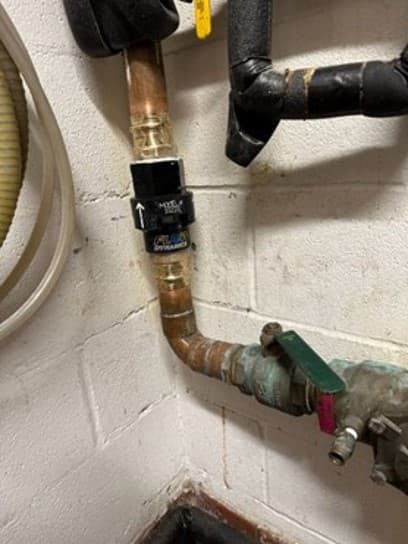
Hotel Water Bill Reduction Without Guest-Facing Cuts
Hotels need a bill-based plan that protects guest experience while reducing water, sewer, and rate-driven operating costs.
Hotels should evaluate water savings by separating guest-room use, laundry, cooling towers, irrigation, sewer charges, and meter size before choosing a conservation project. Smart Valve is most relevant when a hospitality property has high recurring water and sewer spend and wants a behind-the-scenes metered-volume assessment.
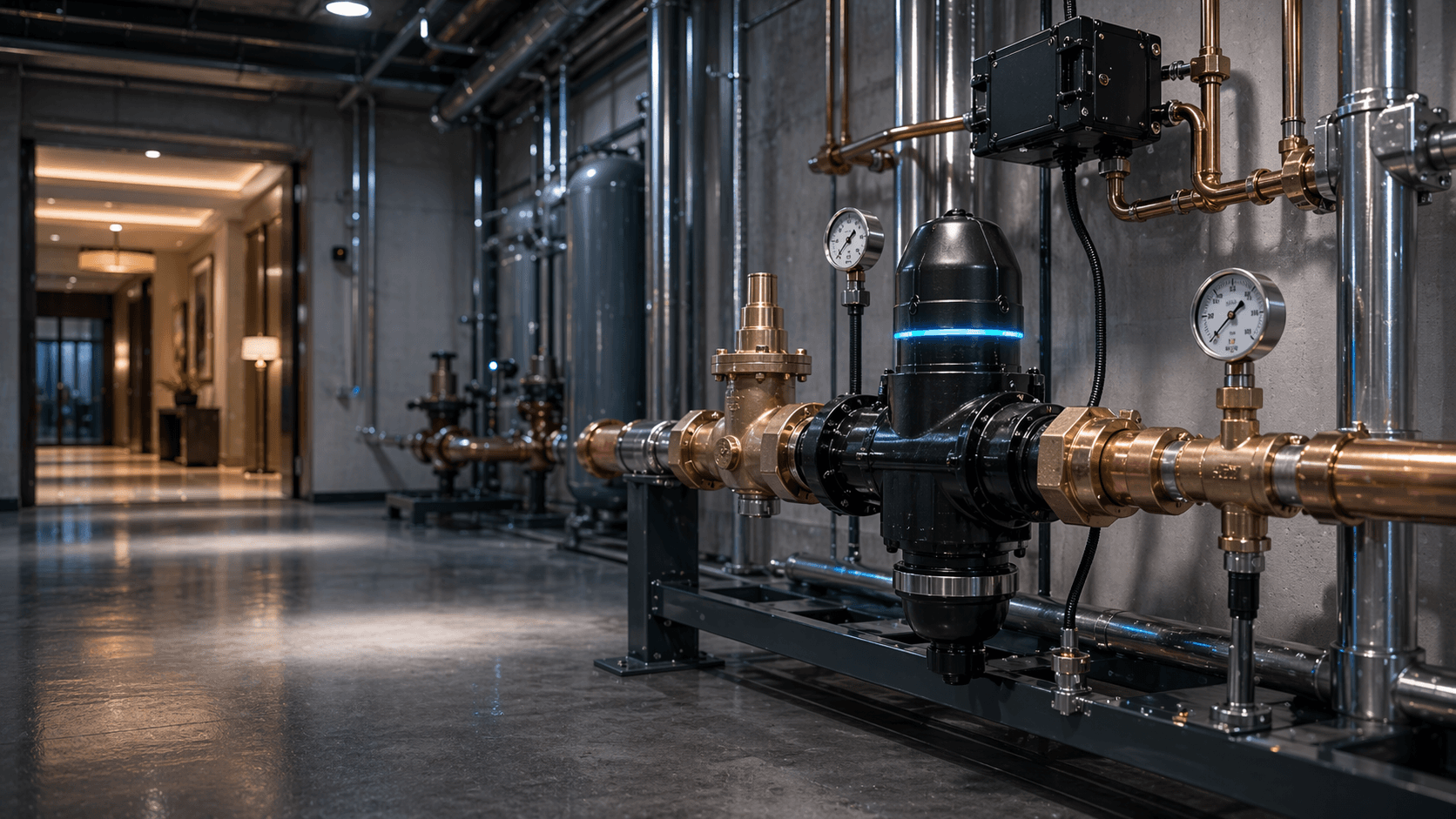
Proven Results for Hotels & Hospitality
Common Water Cost Challenges in Hotels & Hospitality
Guest Experience Priority
Water conservation cannot come at the expense of guest satisfaction. Traditional low-flow solutions often compromise the luxury experience.
EPA Conservation Targets
Meeting federal and local water conservation mandates requires measurable reductions that can be documented for compliance.
High Water Usage Volume
Hotels with pools, spas, laundry operations, and food service have significant water usage that multiplies any billing inaccuracies.
Portfolio Consistency
Multi-property operators need scalable solutions that deliver consistent results across different hotel formats and locations.
Fixture Wear & Maintenance
Pressure fluctuations accelerate wear on plumbing fixtures, increasing maintenance costs and guest complaints.
Sustainability Reporting
Corporate ESG commitments require documented water conservation metrics for annual sustainability reports.
Water-bill decision guide
How to evaluate water savings for Hotels & Hospitality
Hotel water reduction has to protect the guest experience. The strongest plan separates hidden building-system usage from guest-facing fixtures, then models the value of reducing billed volume against local water and sewer rates.
Typical water-use drivers
- Guest showers, toilets, lavatories, and housekeeping turnover
- On-site laundry, commercial kitchens, bars, and banquet operations
- Cooling towers, pools, spas, irrigation, and make-up water
- Variable occupancy, seasonality, and group/event demand
Bill components to separate
- Water volume by main meter and any irrigation or cooling accounts
- Sewer charges tied to water, winter average, or local wastewater method
- Meter-size fixed charges and fire-service or backflow-related charges
- Stormwater, infrastructure, drought, or conservation surcharges
Common waste sources
- Guest-room toilet leaks and fixture drift across many rooms
- Laundry cycles, cooling tower bleed, and kitchen process water
- Irrigation overspray, pool make-up water, and seasonal spikes
- Metered-volume exposure from line conditions and pressure movement
Where Smart Valve fits
Smart Valve fits as a behind-the-scenes metered-volume strategy. It should be assessed after the hotel reviews leaks, cooling/laundry operations, sewer rules, and meter size, because the value is strongest when lower billed volume affects both water and sewer costs.
Documented hotel examples include Westin Hotel Ottawa at 20% savings with $28,149 in savings, St. Regis Toronto and Novotel Toronto Centre at 15%, and Melia Orlando Suite Hotel at 19% annual water and sewer savings with 12.7-month ROI.
Estimate hotel savings from actual utility spend
Use water and sewer bills, room count, occupancy, and local rates to model savings before requesting a site-specific review.
What we need to evaluate your site
Smart Valve Benefits for Hotels & Hospitality
Our proven technology delivers measurable results for hotels & hospitality across the country.
Invisible to Guests
The goal is a main-line, behind-the-scenes improvement that avoids asking guests to accept weaker showers or reduced service.
Documented Hotel Proof
Existing case studies include Westin, St. Regis, Novotel, and Melia properties with documented savings ranges.
Documented Conservation
Bill-based reductions can support internal sustainability reporting when they are tracked against pre-install utility data.
Reduced Fixture Failures
Pressure stabilization extends the life of plumbing fixtures, reducing maintenance calls and guest inconvenience.
Quick Installation
Installation planning should identify meter access, interruption window, and any plumber coordination before scheduling.
Works With Other Conservation Projects
Smart Valve can be evaluated alongside laundry reuse, cooling tower optimization, fixture repair, and irrigation controls.
Hotels & Hospitality Success Stories
Melia Orlando Suite Hotel
Hotel case study reports 14% main-line savings and 29% irrigation-line savings, with combined annual water and sewer savings of $13,382.
Read Full Case Study →Westin Hotel Ottawa
Case-study record shows usage moving from 34,179 cubic meters to 27,516 cubic meters, with $28,149 in savings.
Read Full Case Study →St. Regis Toronto
Case-study record shows usage moving from 22,062 cubic meters to 18,818 cubic meters, with $12,369 in savings.
Read Full Case Study →Novotel Toronto Centre
Case-study record shows usage moving from 23,221,429 liters to 19,879,807 liters after installation.
Read Full Case Study →Frequently Asked Questions
Common questions about Smart Valve for hotels & hospitality.
Will guests notice any change in water pressure or quality?
No. The Smart Valve is adjustable and maintains optimal water pressure throughout your property. Guests will not notice any difference in their experience.
How does Smart Valve help with EPA compliance?
Smart Valve can support conservation reporting when savings are tracked against pre-install and post-install bills. Specific compliance claims should be checked against the hotel brand, utility, or program requirements.
Can Smart Valve be installed across a hotel portfolio?
Yes. Many hospitality companies have implemented Smart Valve across multiple properties with consistent results. We can coordinate portfolio-wide rollouts.
Does it work with pool and spa systems?
A main-line installation may affect metered volume for the property, but pools, spas, irrigation, and cooling systems should be reviewed separately because they can have different meters, sewer treatment, or operational constraints.
What is the warranty on Smart Valve?
Warranty terms should be confirmed for the specific valve size, application, and installation scope during assessment.
How quickly can we see results?
Most properties see measurable bill reduction in their first full billing cycle after installation, typically 30-60 days.
Stop Paying For Air in Your Waterline
Get a free consultation to see how much you could save with the Smart Valve. Average return on investment in just 1.4 years.