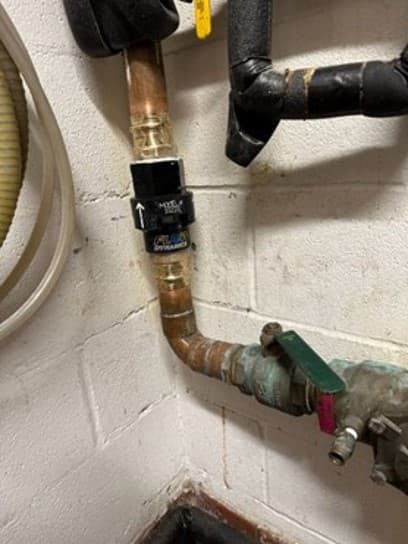
Reduce Office Building Water Costs by 20-35%
Join hundreds of commercial property managers who have dramatically reduced water and sewer expenses with our proven technology. Third-party validated. NSF certified. 8-month average payback.
Smart Valve technology reduces office building water bills by an average of 20-35% by preventing air in water lines from being measured as water by meters. Third-party engineering reviews from Reihl Engineering and Wylie Engineers have validated savings in excess of 20% for commercial office buildings. Installation is simple, requires no building modifications, and delivers ROI in 3-24 months.
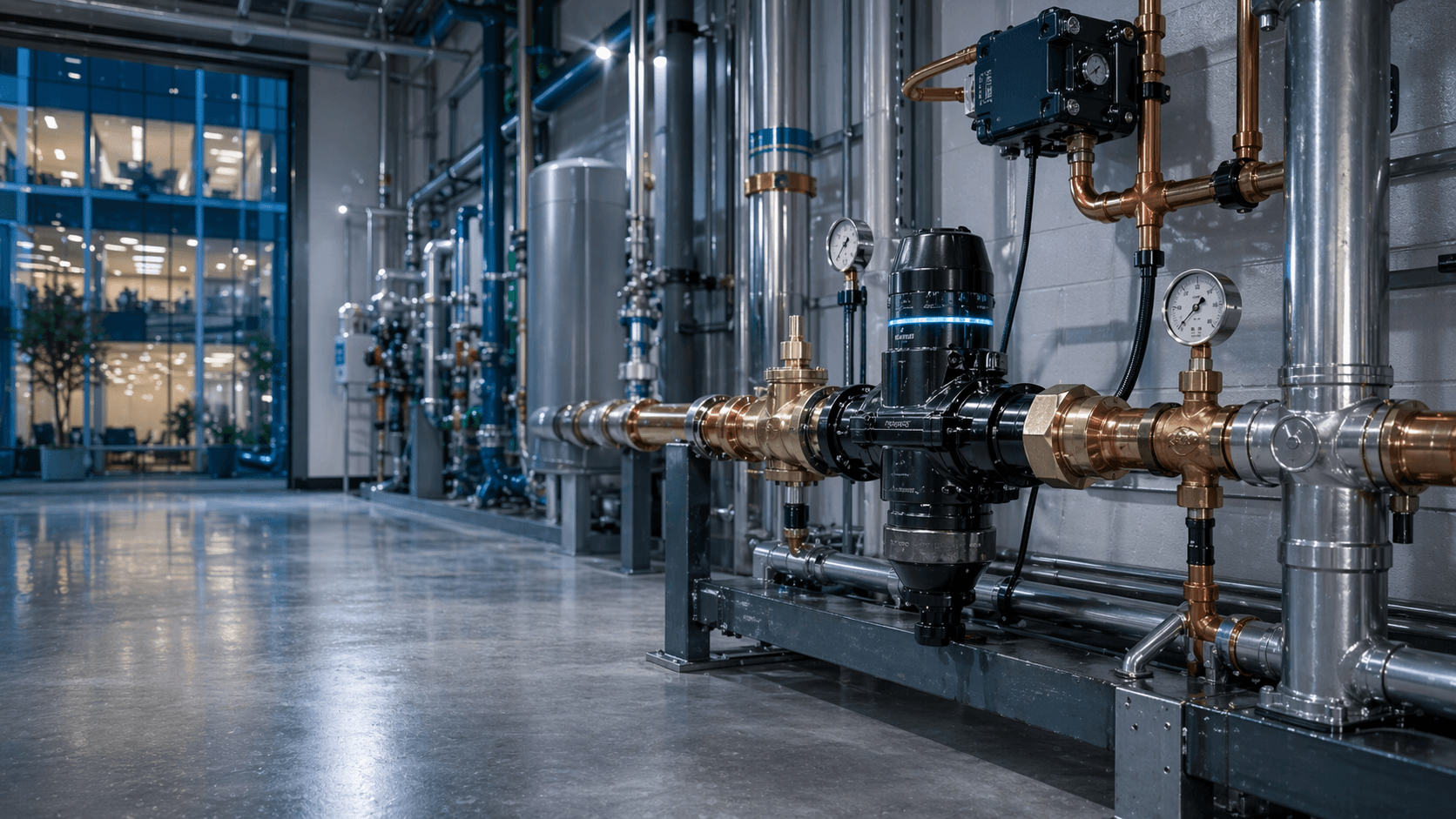
Proven Results for Office Buildings
Common Water Cost Challenges in Office Buildings
Rising Water & Sewer Costs
Water rates have increased 54% since 2010, with some markets seeing 78% increases. Sewer charges often match water usage 1:1, doubling the impact.
Inaccurate Meter Readings
Traditional volumetric meters cannot distinguish between water and air. Air in city water lines expands and inflates your meter readings by 15-25%.
Sustainability Compliance
Meeting corporate ESG goals and LEED certification requirements while balancing operational budgets is increasingly challenging.
Aging Infrastructure
Pressure fluctuations from aging municipal systems cause meter over-spin and can damage plumbing fixtures and equipment.
Portfolio-Wide Expenses
Managing water costs across multiple properties in a portfolio requires consistent, scalable solutions.
Proving ROI to Leadership
Facilities managers need documented, third-party validated results to justify capital expenditures.
Smart Valve Benefits for Office Buildings
Our proven technology delivers measurable results for office buildings across the country.
Third-Party Validated Savings
Independent engineering reviews from Keith Reihl, P.E. and Wylie Engineers confirm savings in excess of 20% for commercial office buildings.
Quick Return on Investment
Average payback period of 1.4 years means the Smart Valve pays for itself quickly through consistent monthly water bill reductions.
No Building Modifications Required
Simple installation on the customer side of the meter. No disruption to tenants or building operations.
Pressure Spike Protection
Reduces pressure fluctuations by up to 63.98%, protecting HVAC equipment, plumbing fixtures, and reducing leak risk.
Portfolio-Wide Implementation
Easily deploy across your entire building portfolio with consistent, measurable results at each property.
Supports LEED Certification
Documented water conservation helps meet LEED Water Efficiency prerequisites and credits.
The Real Cost of Water in Office Buildings
Water is the most overlooked operating expense in commercial real estate. While energy audits are standard practice, fewer than 10% of property managers have ever audited their water costs — despite water and sewer bills averaging $1.20-$2.50 per square foot annually.
Class A (200,000 SF)
$45K-$87K/yr
Water + sewer combined
Class B (100,000 SF)
$22K-$45K/yr
Water + sewer combined
Multi-Tenant (50,000 SF)
$12K-$25K/yr
Water + sewer combined
Hidden Cost: The Air Overcharge
At 20% meter over-registration, a 200,000 SF Class A building in Cleveland ($21/kGal combined) is paying $10,200/year for air that passes through the meter. In markets like San Francisco ($30+/kGal), that figure exceeds $15,000/year.
Office Building Water Costs: National Benchmarks
| Market | Combined Rate /kGal | 200K SF Annual Bill | Air Overcharge (20%) |
|---|---|---|---|
| San Francisco, CA | $30.00+ | $87,000+ | $17,400 |
| Cleveland, OH | $20-22 | $51,000 | $10,200 |
| Minneapolis, MN | $13.67 | $39,600 | $7,920 |
| Houston, TX | $11.50 | $33,400 | $6,680 |
| National Average | $12.50 | $36,250 | $7,250 |
Based on 200,000 SF office building consuming ~242 kGal/month. Rates verified March 2026.
4-Step Water Cost Audit for Office Buildings
Most property managers can complete this in under 30 minutes. If any step reveals an issue, you're likely overpaying.
Pull 12 Months of Bills
Gather water and sewer invoices. Calculate your cost per 1,000 gallons (kGal). If your combined rate exceeds $12.50/kGal, you're in a high-cost market where conservation technology delivers outsized returns.
Check for Seasonal Anomalies
Compare summer vs. winter usage. Office buildings with no irrigation or cooling towers should see minimal seasonal variation. A spike suggests leaks or meter over-registration from pressure volatility.
Calculate Your $/SF Water Cost
Divide annual water+sewer costs by total square footage. If you're above $2.00/SF, you're in the top 25% of water spenders and should investigate immediately. Below $1.20/SF is efficient.
Run a Quick Payback Calculation
Take your annual water+sewer bill, multiply by 20%, then divide into the Smart Valve investment cost. Most office buildings see 8-14 month payback — or use our free ROI calculator for exact numbers.
Run Your Building's Numbers in 60 Seconds
Enter your square footage and city — get exact savings with verified 2026 rate data.
Office Buildings Water Cost Intelligence
$1.85
Avg Water Cost per SF/yr
BOMA 2025
15-25%
Typical Meter Over-Registration
Reihl Engineering
54%
US Water Rate Increase Since 2010
AWWA
$45K-$87K
Annual Water Bill (200K SF)
SmartValve Data
Office Buildings Success Stories
9-Story Office Building
A 156,000 SF Class A office building at $11.50/kGal combined rate achieved validated savings exceeding 20% — saving $7,600/year in water and sewer charges.
Read Full Case Study →10-Story Office Tower
180,000 SF commercial property reduced water and sewer costs by nearly 25% with documented third-party validation — $9,100/year in verified savings.
Read Full Case Study →Ted Rogers Building
Major commercial office tower achieved 21% water savings while maintaining full building operations — demonstrating consistent results across international markets.
Read Full Case Study →Frequently Asked Questions
Common questions about Smart Valve for office buildings.
How much can an office building save with Smart Valve?
Office buildings typically see savings of 20-35% on water and sewer bills. For a 200,000 SF Class A building paying $51,000/year (at $21/kGal combined), that's $10,200-$17,850 in annual savings. Actual results depend on building size, local water rates, and municipal water pressure.
Does the valve affect building water pressure?
No. The Smart Valve is adjustable and can be fine-tuned by building engineers to maintain optimal pressure. It actually helps stabilize pressure by acting as a shock absorber against municipal supply fluctuations — reducing pressure spikes by up to 63.98%.
Will tenants notice any difference?
Tenants will not notice any change in water quality or pressure. The valve operates transparently while delivering consistent savings on your utility bills.
How long does installation take?
Installation typically takes 2-4 hours and can be scheduled during off-peak hours to minimize any disruption. The valve is installed on the customer side of the meter.
Is the Smart Valve certified for commercial buildings?
Yes. Smart Valve is NSF 61 and NSF 372 certified for safety and quality, and is UPC (Uniform Plumbing Code) approved for commercial installations.
How do I calculate ROI for my building?
Use our free ROI Calculator at thesmartwatervalve.com/calculator with your current water and sewer costs. For a typical 200,000 SF office building, payback ranges from 8-14 months depending on local rates.
Stop Paying For Air in Your Waterline
Get a free consultation to see how much you could save with the Smart Valve. Average return on investment in just 1.4 years.