Hospital Water Savings Without Affecting Patient Care
Healthcare facilities trust Smart Valve to reduce operating costs while maintaining the highest standards of care and compliance.
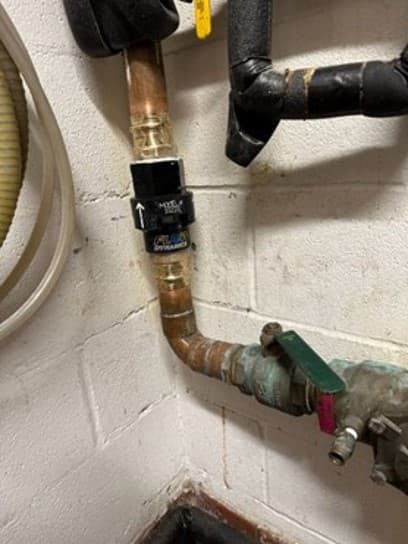
Smart Valve technology helps hospitals and medical facilities reduce water bills by 20-25% without any impact on patient care or clinical operations. The NSF 61 and NSF 372 certified valve is installed at the main meter, requiring no changes to clinical areas. Medical centers have documented annual savings of $87,000+ while meeting Joint Commission sustainability standards.
Proven Results for Hospitals & Medical Facilities
Common Water Cost Challenges in Hospitals & Medical Facilities
Clinical Operations Priority
Any water solution must have zero impact on patient care, sterilization processes, and clinical equipment operation.
24/7 High-Volume Usage
Hospitals operate around the clock with significant water demands from sterilization, laundry, food service, and patient care.
Regulatory Compliance
Healthcare facilities must meet Joint Commission standards and various regulatory requirements for sustainability.
Capital Budget Constraints
Hospital capital budgets prioritize clinical equipment. Utility projects must demonstrate clear, documented ROI.
Complex Building Systems
Large medical campuses have complex water systems serving multiple buildings and specialized equipment.
Equipment Sensitivity
Medical equipment and sterilization systems are sensitive to water pressure fluctuations.
Smart Valve Benefits for Hospitals & Medical Facilities
Our proven technology delivers measurable results for hospitals & medical facilities across the country.
Zero Clinical Impact
Smart Valve is installed at the main meter, outside clinical areas. Patient care, sterilization, and equipment operation are completely unaffected.
Documented Savings for Compliance
Generate water conservation reports for Joint Commission sustainability requirements and healthcare sustainability reporting.
Pressure Stabilization
Protects sensitive medical equipment from pressure surges and fluctuations that can affect performance and longevity.
Campus-Wide Coverage
Single installation at the main meter benefits the entire medical campus—all buildings, all departments, all equipment.
Fast Payback for Capital Approval
Clear ROI documentation helps justify the capital expense and gain approval from finance and facilities leadership.
NSF Certified for Healthcare
NSF 61 and NSF 372 certification ensures the valve meets the strictest safety standards for potable water systems.
Healthcare case study results
MUSC Health: 22% lower billed water charges
The completed MUSC Health project delivered a validated 22% reduction in billed water charges and more than $100,000 in annualized savings across three valves, with payback projected in under six months.
Read the MUSC Health case study →Frequently Asked Questions
Common questions about Smart Valve for hospitals & medical facilities.
Will Smart Valve affect sterilization equipment or clinical operations?
No. Smart Valve is installed at the main water meter, completely outside clinical areas. All sterilization equipment, medical devices, and patient care operations continue normally.
Is Smart Valve approved for healthcare facilities?
Yes. Smart Valve is NSF 61 and NSF 372 certified, meeting all safety standards for potable water in healthcare environments. It is also UPC approved.
How does this help with Joint Commission requirements?
Joint Commission standards include sustainability initiatives. Smart Valve provides documented, measurable water conservation that can be included in your sustainability reporting.
Can Smart Valve be installed on a medical campus with multiple buildings?
Yes. Installation at the main campus meter benefits all buildings on the water system. For campuses with multiple meters, we can install valves at each entry point.
What documentation do you provide for capital approval?
We provide ROI calculations, third-party engineering validation references, and case studies from other healthcare facilities to support your capital approval process.
How long does installation take at a hospital?
Installation typically takes 2-4 hours and can be scheduled to minimize any operational impact. Water interruption is brief and can be coordinated with your facilities team.
Stop Paying For Air in Your Waterline
Get a free consultation to see how much you could save with the Smart Valve. Average return on investment in just 1.4 years.