Conservation That Starts at the Meter
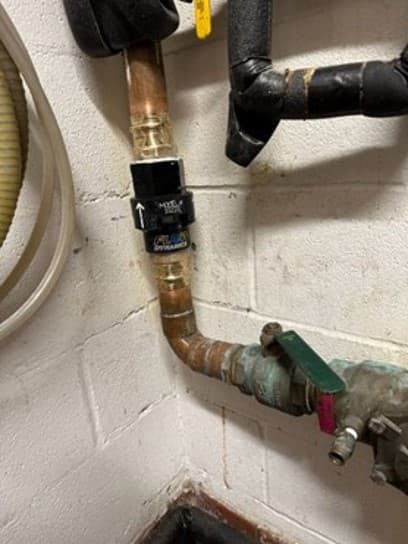
Smart Valve supports water conservation by addressing the conditions that inflate measured volume and make the line harder to control.
Smart Valve contributes to water conservation by reducing billed air volume and improving line stability before water reaches downstream fixtures and equipment. The result is a practical conservation measure that lowers water cost without positioning the property around reduced service quality.
Where Waste Shows Up
Water conservation is usually discussed at the fixture. This page is about conservation at the system level.
Metered Air
Water systems can move measurable air alongside water, especially after maintenance, repairs, pressure changes, and turbulent flow conditions.
Pressure Instability
Sudden pressure swings create stress on lines, fixtures, and equipment while making overall system behavior harder to predict.
Operational Waste
Once a line behaves inconsistently, waste shows up in both utility cost and downstream maintenance burden.
What Smart Valve Improves
The strongest conservation story is one that operators can see in both monthly cost and the way the line behaves after installation.
Lower billed water volume
The valve is used to reduce the amount of non-water volume that is effectively being counted by the meter.
More stable line behavior
A calmer system means fewer pressure spikes and more reliable conditions for occupants and equipment.
Faster financial payback
Conservation projects are easier to approve when savings show up directly in the water bill instead of only in long-term maintenance assumptions.
Where It Fits Best
Properties with consistent water spend and recurring line instability are usually the clearest fit for this kind of conservation project.
Restaurants and food service
High water use and tight operating margins make billing accuracy highly visible.
Hospitals and healthcare
Large facilities benefit from reduced waste while keeping pressure more stable across critical operations.
Hotels and resorts
Guest-facing systems need consistent pressure, making stability just as important as water savings.
Industrial facilities
Heavy-volume sites see the strongest dollar impact when billed air volume and line instability are reduced.
Conservation Questions
These are the questions that usually determine whether the page reads as a true conservation solution or just another regulator pitch.
Does water conservation here mean lower fixture flow or service reduction?
No. The Smart Valve pitch is not about restricting occupant use. It focuses on reducing waste tied to metered air and unstable line conditions while preserving functional service.
How does this differ from a basic pressure regulator?
A standard regulator primarily addresses pressure. Smart Valve is positioned around both line stabilization and reducing air-related over-registration through the meter.
What kinds of properties benefit most?
Properties with meaningful monthly water spend and repeated pressure or billing issues usually see the clearest operating case for installation.
Stop Paying For Air in Your Waterline
Get a free consultation to see how much you could save with the Smart Valve. Average return on investment in just 1.4 years.