How to Cut Costs on a Commercial Water Bill
A practical commercial water-bill reduction guide for owners, CFOs, and facility teams. Learn how to read the bill, separate water from sewer charges, find waste, model savings, and decide whether Smart Valve fits.
Direct answer
To cut a commercial water bill, start with the bill data: separate water, sewer, fixed charges, tiers, and surcharges, then compare usage against operations. The fastest savings usually come from fixing leaks, correcting sewer assumptions, reducing high-use processes, and lowering metered-volume exposure where a Smart Valve assessment shows fit.
Assessment target
20%
Common screening model for metered-volume reduction, verified against actual bills before purchase decisions.
Bill history
12 mo
Enough history to see seasonality, rate changes, usage spikes, and sewer behavior.
Unit to know
CCF
One CCF is about 748 gallons. Normalizing units is the first step in comparing bills.
Start With the Bill, Not the Device
Most commercial water-bill advice starts with leaks, fixtures, and irrigation. Those checks matter, but they are incomplete. A property owner also needs to know how the utility converts metered volume into dollars. Sewer charges, fixed meter fees, drought tiers, infrastructure surcharges, and account class can change the payback more than the water rate alone.
The right question is not simply "how do we use less water?" The better question is: which billed line items would actually fall if the site reduces metered volume or corrects a billing issue?
1. Break the Bill Into Cost Drivers
Water volume
The metered gallons or CCF that the utility charges for supply. This is usually the easiest line item to model, but it is not always the largest cost.
Sewer or wastewater
Often billed from metered water volume, a percentage of water charges, or a winter average. Sewer can exceed the water charge on indoor-use properties.
Meter and fixed charges
Monthly fees based on meter size, account class, fire service, or base service. These do not fall when usage falls, but they matter in payback math.
Tiers and surcharges
High-volume accounts may pay higher marginal rates, drought charges, infrastructure fees, stormwater fees, or local pass-through charges.
2. Run the First Checks Before You Buy Anything
A good commercial water-bill audit is not a sales shortcut. It is a diagnostic process. These checks help separate operational waste from billing structure, local rate pressure, and metered-volume issues.
Compare the latest bill to the same month last year, not only to last month.
Convert usage to one unit: CCF, kGal, or gallons. One CCF equals about 748 gallons.
Separate water, sewer, stormwater, fixed charges, taxes, and surcharges.
Check whether sewer is tied to metered water or calculated from a winter average.
Look for usage spikes that do not match occupancy, production, weather, or operating hours.
Confirm meter size, account class, and whether irrigation or cooling water is separately metered.
3. Compare the Reduction Options
The best savings plan usually combines several actions. The table below shows where each option fits and where it stops working.
| Option | Best when | Limit |
|---|---|---|
| Fix leaks and failing fixtures | Best first step when usage spikes suddenly or the meter moves while the building is quiet. | Leak repair will not solve rate increases, sewer multipliers, tier penalties, or meter/line-condition issues. |
| Tune operations and equipment | Useful for kitchens, laundry, cooling towers, car washes, irrigation, washdown, and process water. | Savings depend on staff behavior, maintenance discipline, and whether water quality or operations can tolerate changes. |
| Review sewer rules | Important when water is used outdoors, evaporated, consumed in product, or sent through cooling towers. | Many utilities require deduct meters, applications, or documented non-discharge use before reducing sewer charges. |
| Address metered-volume exposure | Relevant when the site has high recurring water/sewer spend and line or pressure conditions may affect what the meter records. | Smart Valve fit should be evaluated from actual bills, meter size, rate class, installation scope, and post-install verification. |
Calculator block
What Could a 20% Reduction Mean?
For screening, multiply your monthly water and sewer spend by 20%, then multiply by 12. A property paying $5,000 per month would model about $12,000 per year in potential savings before installation cost, taxes, maintenance context, and site-specific verification.
This is a planning model, not a guarantee. A real assessment should use your utility bills, meter size, usage history, local sewer logic, and installation scope.
4. Where Smart Valve Fits
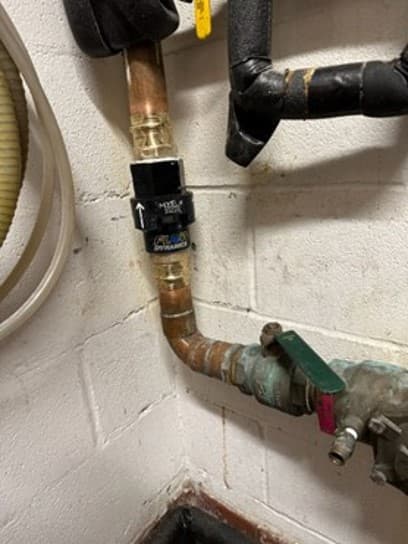
Smart Valve is not a replacement for leak repair, fixture maintenance, irrigation control, or good utility-account review. It belongs in the part of the plan focused on metered-volume exposure: whether line conditions, pressure behavior, and the meter-side installation opportunity make billed volume reducible without asking occupants or staff to change behavior.
The strongest Smart Valve candidates are high-use properties where sewer charges follow metered water, rates are high, and the savings can be checked against post-install bills. That is why the assessment starts with the bills and meter information rather than a generic sales call.
5. What We Need to Evaluate Your Site
What Happens Next
You send 12 months of water and sewer bills.
We review usage, rate class, sewer charges, meter size, and billing patterns.
We estimate savings and payback using your site data and local rates.
If the site qualifies, installation scope is confirmed and scheduled.
Savings are checked against post-install utility bills.
Next Guides in This Cluster
Why Is My Commercial Water Bill So High?
Continue the commercial water-bill reduction path.
Bill literacyHow to Read a Commercial Water and Sewer Bill
Continue the commercial water-bill reduction path.
Meter checkTesting Water Meter Accuracy
Continue the commercial water-bill reduction path.
Local ratesCompare Commercial Water and Sewer Rates by City
Continue the commercial water-bill reduction path.
Commercial Water-Bill Reduction FAQ
What is the fastest way to cut a commercial water bill?
Start by separating the bill into water, sewer, fixed charges, tiers, and surcharges. Then check for leaks, usage spikes, sewer rules, meter size, and rate-class issues before modeling any equipment or Smart Valve savings.
Why can sewer charges be bigger than water charges?
Many utilities bill sewer from metered water volume or as a percentage of water charges. If sewer rates are higher than water rates, every extra billed gallon can create a larger wastewater cost than supply cost.
Where does Smart Valve fit in commercial water-bill reduction?
Smart Valve belongs after the site has reviewed bills, usage, sewer logic, meter size, and line conditions. It is evaluated as a metered-volume reduction strategy, especially where lowering billed volume affects both water and sewer charges.
Written by
Smart Valve Team
Updated
2026-05-19