Commercial Water Conservation: The Complete Guide to Cutting Water Costs 30-50% (2026)
The definitive guide to commercial water conservation. Covers 8 proven strategies — from meter accuracy and leak detection to fixture upgrades, cooling tower optimization, greywater reuse, and EPA rebate programs. Includes cost data for restaurants, hotels, hospitals, office buildings, and car washes.
Quick Answer: What is commercial water conservation?
Commercial water conservation reduces water usage in business facilities through 8 strategies: (1) meter accuracy optimization, (2) leak detection, (3) high-efficiency fixtures (EPA WaterSense toilets, aerators), (4) smart irrigation, (5) cooling tower optimization, (6) greywater reuse, (7) staff education, and (8) water auditing. A comprehensive program cuts water and sewer bills 30-50% with typical ROI under 18 months. The single highest-impact strategy is addressing air in water lines, which inflates metered readings 15-25% at most commercial properties.
30-50%
Achievable Savings
<18mo
Typical ROI
$45K
/Year (Avg. Facility)
8
Proven Strategies
How Much Water Does Your Facility Use?
Before you conserve, you need to benchmark. Water usage varies dramatically by facility type:
| Facility Type | Daily Usage | Monthly (kGal) | Annual Cost* |
|---|---|---|---|
| Office Building (100K sf) | 2,000-4,000 gal | 60-120 kGal | $9,000-$18,000 |
| Hotel (200 rooms) | 20,000-40,000 gal | 600-1,200 kGal | $90,000-$180,000 |
| Restaurant (full-service) | 5,800 gal | 174 kGal | $26,100 |
| Hospital (250 beds) | 37,500-75,000 gal | 1,125-2,250 kGal | $168,750-$337,500 |
| Car Wash (tunnel, 200/day) | 6,000 gal | 180 kGal | $27,000 |
| Multifamily (100 units) | 5,000-10,000 gal | 150-300 kGal | $22,500-$45,000 |
*At national average combined water+sewer rate of $12.50/kGal. Check your city's rate →
Strategy 1: Meter Accuracy Optimization (15-25% savings)
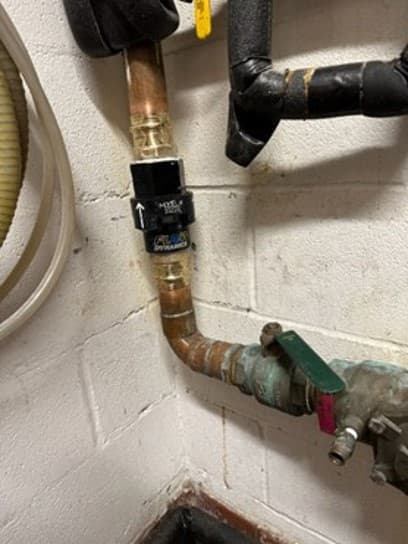
This is the single highest-ROI conservation measure and the one most facilities overlook. Municipal water contains dissolved air that expands as pressure drops at your building's meter. Standard water meters measure volume, not liquid density — so they count that expanded air as water. The result: 15-25% of your metered volume (and your bill) is air.
Smart Valve — Air Elimination Technology
Installs at the meter. Uses Boyle's Law to compress air before it reaches the meter. NSF 61/372 certified. No maintenance. 10-year warranty.
20-35%
Bill Reduction
Strategy 2: Leak Detection & Repair (10-20% savings)
The EPA estimates 10% of commercial buildings have leaks wasting 90+ gallons per day. A single running toilet wastes 200+ gallons/day — over $1,500/year in high-rate markets. Most commercial leaks go undetected for weeks or months because they occur behind walls, underground, or in low-traffic utility closets.
Common Commercial Leak Costs
- • Dripping faucet: 3,000+ gal/year → $45/year
- • Leaking toilet flapper: 6,000 gal/month → $1,080/year
- • Running toilet (stuck valve): 15,000 gal/month → $2,700/year
- • Underground pipe crack: 18,000 gal/month → $3,240/year
At $12.50/kGal. Sewer charges typically mirror water volume — double these costs in most markets.
Implementation: Install continuous flow monitoring that alerts your maintenance team via SMS/email when flow occurs during periods when none should (overnight, weekends, holidays). Complement with monthly physical inspections of restroom fixtures, utility closets, and irrigation systems.
Strategy 3: High-Efficiency Fixtures — EPA WaterSense (5-15% savings)
Replacing outdated fixtures with EPA WaterSense-labeled products delivers immediate, permanent water savings:
| Fixture | Standard | WaterSense | Savings |
|---|---|---|---|
| Toilet (gpf) | 1.6 gpf | 1.28 gpf | 20% |
| Urinal (gpf) | 1.0 gpf | 0.5 gpf | 50% |
| Faucet aerator (gpm) | 2.2 gpm | 0.5 gpm | 77% |
| Pre-rinse spray valve | 3.0 gpm | 1.0 gpm | 67% |
| Showerhead (gpm) | 2.5 gpm | 2.0 gpm | 20% |
Key stat: Replacing a single commercial pre-rinse spray valve from 3.0 gpm to 1.0 gpm saves over 7,000 gallons per week in a typical restaurant — a $50-$100 fixture that pays for itself in under one month.
How Much Could You Save?
Enter your usage or current bill to see exact savings at your city's 2026 rates.
Strategy 4: Smart Irrigation (25-50% of outdoor water)
Landscape irrigation accounts for 20-30% of total water use at commercial properties with significant outdoor areas. Weather-based smart controllers adjust watering schedules based on actual conditions instead of fixed timers — eliminating irrigation during rain, reducing frequency during cool periods, and targeting root zones with drip systems instead of spray.
Implementation: Replace timer-based controllers with EPA WaterSense-labeled smart irrigation controllers. Convert spray heads to drip irrigation where possible. Use native/drought-tolerant plants (xeriscaping) to reduce watering needs permanently.
Rebate Alert
Many water utilities offer $200-$1,000 rebates for smart irrigation controller installations. Check your local utility's program.
Strategy 5: Cooling Tower Optimization (10-30% of cooling water)
For office buildings, hospitals, and hotels with HVAC cooling towers, cooling water can exceed domestic water use. The key metric is cycles of concentration (CoC) — the number of times water is recycled before blowdown. Increasing CoC from 3 to 6 cuts makeup water by 20%.
Implementation: Work with a water treatment specialist to optimize chemical treatment, install conductivity controllers for automated blowdown, and consider side-stream filtration to extend cycle life. Target 6-8 CoC for recirculating systems.
Strategy 6: Greywater Reuse & Rainwater Harvesting
Greywater (from sinks, showers, and laundry) can be treated and reused for toilet flushing, irrigation, and cooling tower makeup water. Commercial greywater systems typically recycle 30-50% of a building's wastewater stream.
Rainwater harvesting captures roof runoff for non-potable uses. A 10,000 sf roof in a region with 40 inches of annual rainfall captures approximately 250,000 gallons/year — enough to offset significant irrigation or toilet flushing demand.
Best for: New construction, LEED-seeking properties, and facilities in water-stressed regions (California, Arizona, Texas).
Strategy 7: Staff Education & Conservation Culture
Technology alone doesn't solve the problem. Staff behavior drives 10-20% of facility water use. Key initiatives include:
- • Kitchen staff: Train on defrosting under running water (use refrigerator thawing instead), full dishwasher loads only, and reporting leaks immediately
- • Maintenance teams: Implement monthly leak inspection checklists covering all restrooms, utility closets, and mechanical rooms
- • Landscaping crews: Water before 6 AM to minimize evaporation; adjust schedules monthly based on weather
- • All staff: Post signage in break rooms and restrooms reinforcing conservation practices
Strategy 8: Water Auditing & Sub-Metering
You can't manage what you can't measure. A professional water audit identifies your facility's top 3-5 water consumers and quantifies the savings opportunity for each. Sub-metering — installing secondary meters by zone, floor, or equipment — provides ongoing visibility and accountability.
Properties that implement sub-metering see an average 15-25% reduction simply because "what gets measured gets managed." For multifamily properties, sub-metering enables fair tenant billing (RUBS), which naturally drives conservation.
Prioritized Action Plan: Where to Start
Not all strategies deliver equal ROI. Here's the recommended implementation order:
Fix meter accuracy (Smart Valve)
15-25%ROI: 12-18 monthsHighest ROI, zero operational impact, one-time install
Detect and repair all leaks
10-20%ROI: ImmediatePure waste elimination — every dollar saved is profit
Upgrade fixtures (WaterSense)
5-15%ROI: 3-12 monthsLow cost, immediate savings, rebates often available
Optimize irrigation
25-50% outdoorROI: 6-18 monthsMajor savings if you have significant landscaping
Cooling tower optimization
10-30% coolingROI: 12-24 monthsOnly applies to buildings with cooling towers
Staff education program
5-10%ROI: ImmediateFree to implement, compounds other savings
Greywater/rainwater systems
15-30%ROI: 3-7 yearsHigher capital cost, best for new construction or major renovations
Sub-metering & ongoing audit
15-25%ROI: 12-18 monthsEssential for multi-tenant properties and continuous improvement
Rebates & Incentives for Commercial Water Conservation
Many water utilities offer financial incentives for conservation:
- • EPA WaterSense fixture rebates: $50-$200 per toilet, $100-$500 per urinal
- • Smart irrigation controller rebates: $200-$1,000 per controller
- • Free water audits: Many utilities (e.g., North Marin Water District) offer free commercial water audits
- • Retrofit assistance: Some utilities provide free aerators, low-flow showerheads, and toilet flappers for commercial customers
- • Reduced sewer rates: Properties with certified water-saving equipment may qualify for reduced sewer volume credits
Check your local water utility for current programs. Availability varies by region.
Start Your Conservation Program Today
Enter your current water bill or usage to see exactly how much you could save with verified 2026 rates for your city.