Nashville 2026 Water and Sewer Rates: The Commercial Sewer Exposure Is the Story
Metro Water Services lists a 3% 2026 increase for residential and commercial accounts, but sewer charges and infrastructure replacement fees make the commercial exposure much larger than the headline suggests.
Key Takeaway
Metro Water Services says residential and commercial rates increase by 3% on Jan. 1, 2026. For non-residential accounts, the 2026 volume rates are $3.31/CCF for water and $7.02/CCF for sewer, with separate 10% infrastructure replacement fees applied to water and sewer service charges. That makes wastewater the larger cost driver for restaurants, hotels, multifamily, campuses, and other high-use accounts.
3%
2026 Increase
Residential and commercial
$3.31/CCF
Water Volume
Non-residential 2026
$7.02/CCF
Sewer Volume
Non-residential 2026
10%
IRF
Water and sewer charges
What changed
Nashville is a good example of why commercial accounts should not stop at the published percentage increase. Metro Water Services lists a 3% increase effective Jan. 1, 2026, but the actual bill is built from fixed charges, water volume, sewer volume, sales tax on water, and infrastructure replacement fees.
For non-residential accounts, the 2026 sewer volume rate is $7.02/CCF compared with a $3.31/CCF water volume rate. Sewer is the dominant line item before the 10% sewer infrastructure replacement fee is added.
Commercial impact model
At 300,000 gallons per month, a commercial account uses about 401 CCF. The water and sewer volume charges alone are roughly $4,143/month before fixed meter charges, water sales tax, and infrastructure replacement fees. Adding the 10% water and sewer infrastructure replacement fees pushes the modeled volume-linked exposure above $4,550/month.
The budget lesson is simple: a 3% published increase can still reveal a high-cost wastewater market when the sewer rate is more than double the water rate.
What operators should do
Separate the bill into water, sewer, infrastructure replacement fees, fixed meter charges, and stormwater. Then calculate cost per 1,000 gallons using the combined water and sewer total, not the water line alone.
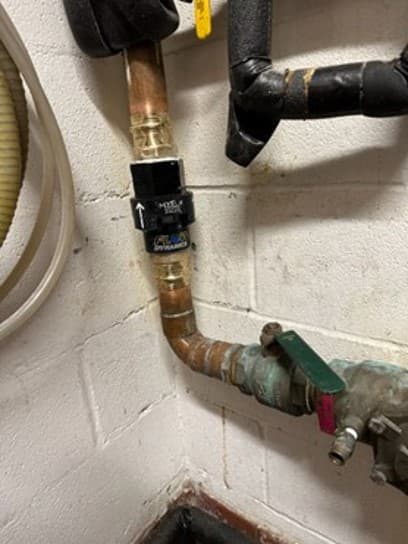
If sewer is billed from metered water, lowering water volume can reduce both sides of the bill. Smart Valve should be evaluated first on meters with high indoor use, because those gallons are most likely to flow through to sewer charges.
Commercial Water Cost Alert
Model Your Facility's Exposure
Use your current monthly bill or kGal usage to estimate how much metered-volume reduction could offset this local rate pressure.
FAQ
How much are Nashville commercial water and sewer rates increasing in 2026?
Metro Water Services says residential and commercial water and sewer rates increase by 3% on Jan. 1, 2026.
Why is sewer the main Nashville commercial bill risk?
The 2026 non-residential sewer volume rate is $7.02/CCF, more than twice the $3.31/CCF non-residential water volume rate, and sewer charges also carry a 10% infrastructure replacement fee.
Sources
Turn Rate Pressure Into a Water Savings Plan
Smart Valve helps commercial properties reduce metered volume before higher rates and surcharges multiply the cost of every gallon.
Calculate Your Savings