Wellesley Commercial Water and Sewer Rates: July 2026 PFAS and MWRA Cost Signal
Wellesley commercial water and sewer rates change for bills issued on and after July 1, 2026. Commercial accounts should separate customer charges, service rates, readiness-to-serve charges, and MWRA sewer adjustments.
Quick Answer
Wellesley says commercial water and sewer rates change for bills issued on and after July 1, 2026. Per-unit water rates rise 15% for PFAS treatment, capital work, and drought reserve needs; per-unit sewer rates rise 3%. The town estimates a $510 annual increase for an average commercial customer using 240 CCF per year.
Jul. 1
Effective Bills
2026 and after
15%
Water Increase
Per-unit rates
3%
Sewer Increase
Per-unit rates
$510
Avg. Annual Impact
240 CCF commercial example
What changed in Wellesley
Source-reported facts: Wellesley DPW sent a commercial water and sewer customer letter stating that rates change for bills issued on and after July 1, 2026, based on water used beginning with the June meter reading.
The town says per-unit water rates increase 15% and per-unit sewer rates increase 3%. The monthly customer charge does not change for either water or sewer.
Who may be affected
The commercial audience includes Wellesley offices, schools, healthcare facilities, restaurants, hotels, multifamily properties, campuses, retail buildings, and industrial or institutional users with monthly water and sewer bills.
The letter gives a useful commercial benchmark: an average Wellesley commercial customer using 240 CCF per year is estimated to see a $428 annual water increase and an $82 annual sewer increase.
Why this matters for commercial water bills
The water increase is tied primarily to capital investments for PFAS treatment and an added revenue reserve related to the likelihood of ongoing state drought declarations. That is a cost signal property teams should track even if usage is stable.
The sewer increase is tied to capital investment and a moderate increase in retained earnings reserve. Wellesley says the sewer rate includes a monthly customer charge, service rate, and MWRA adjustment, so commercial accounts should not read the sewer line as one simple water-volume charge.
What a 20 percent usage reduction could mean
Directional model: the town example uses 240 CCF per year. A 20 percent usage reduction would reduce annual usage by 48 CCF, from 240 CCF to 192 CCF, before considering customer charges and site-specific billing rules.
Because the customer charge does not change, a 20 percent usage reduction would not reduce every water or sewer line by 20 percent. The exact dollar value should be modeled from the site bill using Wellesley service rates, readiness-to-serve charges, MWRA adjustment, meter history, and whether usage is actually controllable.
What to check first on your bill
Pull 12 months of bills and record monthly CCF, customer charge, service rate, readiness-to-serve charge, sewer service rate, MWRA adjustment, meter size, and any abnormal usage alerts from the town customer portal.
If the post-July bill increase is larger than the rate letter suggests, check leaks, irrigation, cooling loads, cafeteria or kitchen use, laundry, occupancy, estimated reads, and any unusual operating month before assuming the entire increase is unavoidable.
Where Smart Valve fits
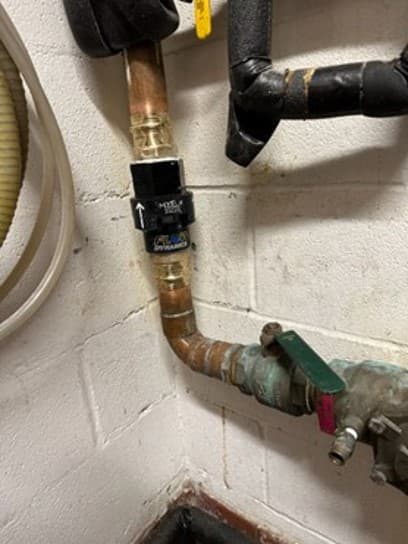
Smart Valve may be relevant when a Wellesley commercial account has meaningful controllable metered volume and a qualified site condition. It cannot reduce monthly customer charges or non-usage-based fees.
A bill assessment should compare pre-July and post-July usage, then model only usage-linked water and sewer components before using any 20 percent savings assumption.
What to Do Next
Use the town customer portal to compare usage before and after the June meter reading.
Separate customer charges from service, readiness-to-serve, and MWRA adjustment lines.
Model the town’s 240 CCF commercial example against your own annual usage baseline.
FAQ
How much are Wellesley commercial water rates increasing in July 2026?
Wellesley says per-unit commercial water rates increase 15% for bills issued on and after July 1, 2026.
How much are Wellesley commercial sewer rates increasing?
Wellesley says per-unit sewer rates increase 3%, with the monthly customer charge unchanged.
What is the estimated impact for an average Wellesley commercial customer?
The DPW letter estimates a $428 annual water increase and an $82 annual sewer increase for an average commercial customer using 240 CCF per year.
Sources
Related Commercial Water Resources
Model This Market Against Your Actual Bill
Use your local rate, current monthly bill, and billed usage to estimate how much controllable volume reduction could offset this market pressure.