Los Angeles LADWP Schedule C: July-December 2026 Commercial and Industrial Water Rate Checks
LADWP Schedule C July-December 2026 rates list commercial, industrial, governmental, and temporary-construction water charges by HCF, with tier allotments tied to prior winter usage and special high-season provisions.
Quick Answer
LADWP Schedule C rates for commercial, industrial, and governmental customers change for July-December 2026. Inside Los Angeles, total consumption charges are $10.529 per HCF in Tier 1 and $14.513 in Tier 2, with first-tier allotments tied to prior winter usage and special high-season provisions.
$10.529
Tier 1
July-Dec 2026 per HCF
$14.513
Tier 2
July-Dec 2026 per HCF
$0.319
Outside Surcharge
2026 per HCF
HCF
Unit
100 cubic feet
What changed in LADWP Schedule C
Source-reported facts: LADWP Schedule C applies to commercial, industrial, governmental, temporary construction, and other water service where no rate schedule is specified.
For service within the City of Los Angeles, LADWP lists July-December 2026 total consumption charges of $10.529 per HCF for Tier 1 and $14.513 per HCF for Tier 2.
Who may be affected
Hotels, restaurants, entertainment venues, industrial facilities, campuses, healthcare sites, retail centers, construction accounts, and government facilities should verify Schedule C applicability and HCF usage.
Outside-city accounts should add the outside-city surcharge. LADWP lists the 2026 outside-city surcharge at $0.319 per HCF.
Why the first-tier allotment matters
LADWP says the Tier 1 summer usage block is tied to prior winter usage and calculated from specified historical winter-use factors. Customers without an established first-tier block are billed at Tier 1 until the block can be calculated.
That means two commercial properties with the same monthly HCF may have different Tier 2 exposure depending on their winter-use history and allotment calculation.
What a 20 percent usage reduction could mean
Directional estimate: assume a Los Angeles Schedule C account uses 300 HCF in a month and the last 60 HCF are billed at the July-December 2026 Tier 2 rate. A 20 percent reduction equals 60 HCF.
At $14.513 per HCF, that Tier 2 water exposure is about $870.78 per month before any sewer, sanitation, fixed, or non-LADWP charges. Actual savings depend on allotment, billing period, service area, and site feasibility.
What to check first on your bill
Confirm Schedule C service, HCF, billing period, first-tier allotment, Tier 2 volume, inside-city or outside-city status, and whether General Provision N or General Provision M could affect high-season allotments.
Do not assume a 20 percent reduction removes every Los Angeles utility line. Sewer, sanitation, fixed, meter, and non-water fees need separate source documents.
Where Smart Valve fits
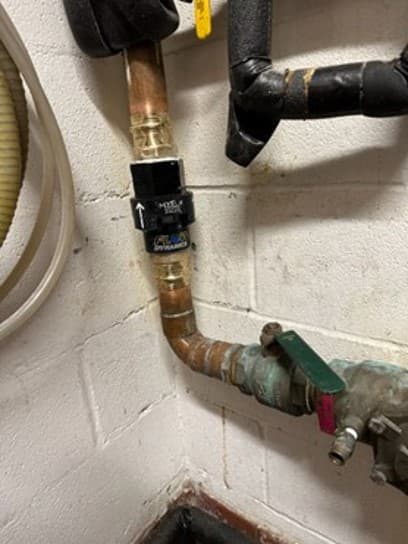
Smart Valve may be relevant when a Schedule C site has controllable water volume, especially if usage is consistently reaching Tier 2. It cannot change the LADWP tier formula or historical allotment calculation.
A useful assessment starts with HCF by month, tier position, and how much of the bill is variable water exposure rather than fixed or unrelated charges.
What to Do Next
Confirm whether the account is LADWP Schedule C.
Identify Tier 2 HCF before estimating usage-reduction economics.
Separate water-only LADWP exposure from sewer, sanitation, and fixed fees.
FAQ
What are LADWP Schedule C July-December 2026 rates?
For service within Los Angeles, LADWP lists July-December 2026 Schedule C total consumption charges at $10.529 per HCF for Tier 1 and $14.513 per HCF for Tier 2.
What is the LADWP outside-city surcharge for 2026?
LADWP lists a 2026 outside-city surcharge of $0.319 per HCF for service outside the Los Angeles city limits.
Does Smart Valve change LADWP first-tier allotments?
No. Smart Valve may help reduce controllable metered volume, but it does not change LADWP allotment rules or fixed/non-water charges.
Sources
Related Commercial Water Resources
Model This Market Against Your Actual Bill
Use your local rate, current monthly bill, and billed usage to estimate how much controllable volume reduction could offset this market pressure.