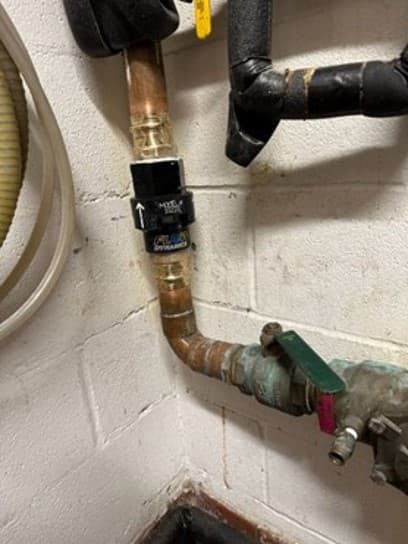
Savings That Show Up on the Bill and in the Building
Smart Valve improves billing accuracy, calms pressure volatility, and trims the system stress that drives water waste and equipment wear.
Smart Valve reduces billed water use by limiting air passing through the meter, while also stabilizing pressure and protecting downstream equipment. Most properties use it to lower recurring water costs, reduce system volatility, and recover the installation cost in a practical operating window.
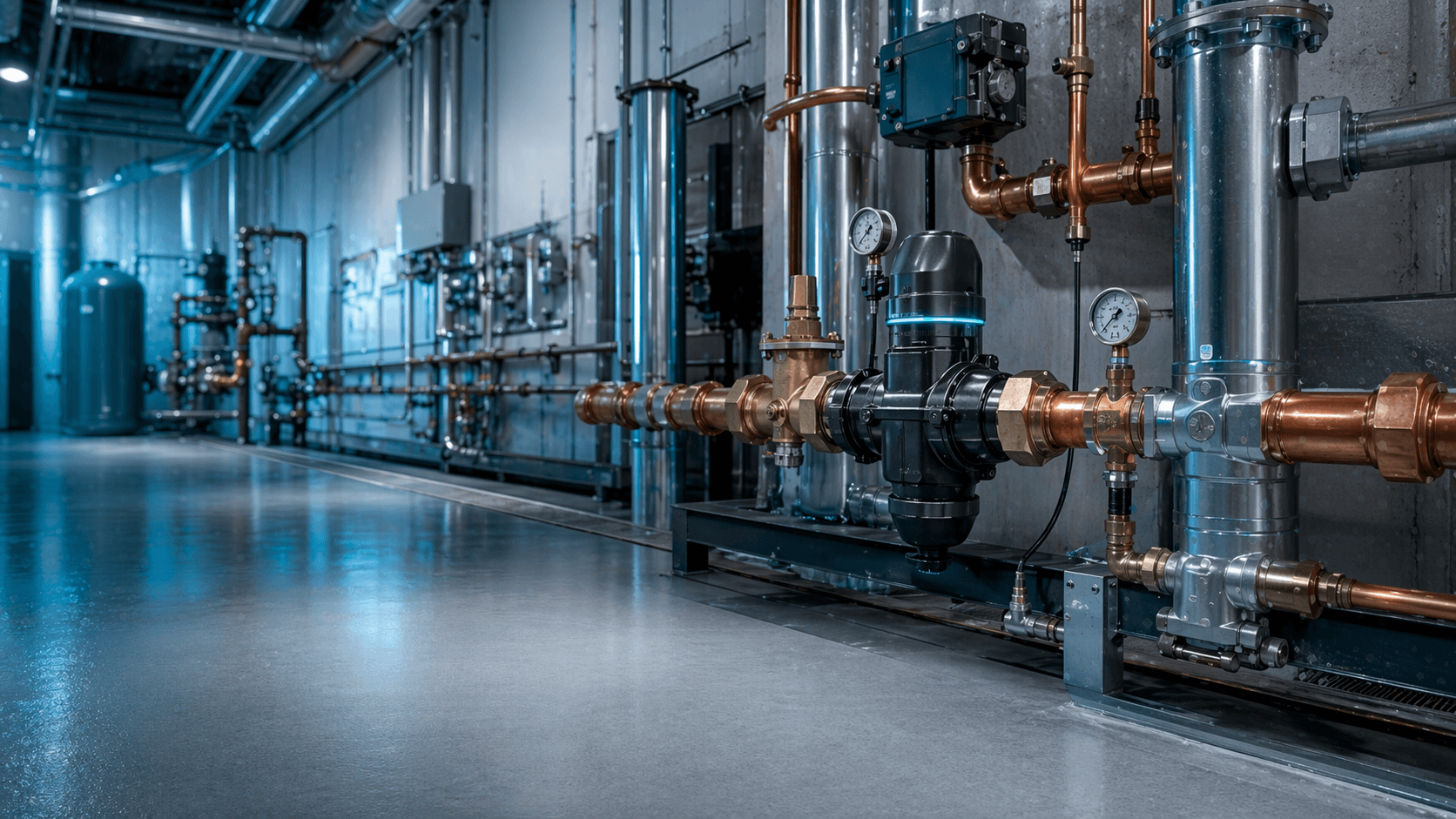
Why the Benefit Stack Matters
The Smart Valve is not a one-line efficiency claim. It reduces the measured air component that can inflate water bills, smooths line behavior, and lowers the mechanical stress caused by sudden pressure movement. That combination is why the economics are better than a basic regulator-only approach.
On high-usage properties, small percentage improvements compound quickly. Billing accuracy improves immediately, maintenance teams see more stable performance, and the project is easier to justify because it affects both operating expense and system behavior.
Benefit Summary
Lower water bills by reducing air-related over-registration.
More stable pressure for fixtures, kitchens, equipment, and tenants.
Less wear on valves, fittings, and water-fed equipment.
Fast installation with no recurring maintenance program.
NSF 61 and NSF 372 certification for potable-water applications.
Primary Benefits
These are the three levers operators feel first: billing accuracy, line stability, and a cleaner water stream through the meter.
Lower Water Bills
Eliminate a meaningful share of air-related over-registration so your bill tracks closer to actual water volume.
Pressure Optimization
Reduce spikes and violent pressure swings that create service complaints, equipment stress, and erratic line behavior.
Air Reduction
Restrict air from moving through the measured line so the meter captures less non-water volume in the first place.
Operational Benefits
The project works best when the facility team sees both utility savings and fewer downstream system issues.
Flow Stabilization
Smoother water movement reduces turbulence across the line and gives fixtures, kitchens, and process equipment a steadier feed.
Reduced Wear
Pressure spikes and trapped air stress valves, fittings, and water-using equipment. Stabilizing the line lowers that maintenance load.
Simple Installation
Most installs take just a few hours and slot into the existing line without a disruptive retrofit across the building.
Validated Performance
Texas A&M field and lab testing gives operators a documented basis for savings expectations instead of a generic efficiency claim.
Financial Impact
Even conservative savings rates change the math quickly on properties with persistent water spend.
Estimated Annual Savings
Illustrative result for a $5,000 monthly water bill with a 12% reduction.
Months to ROI
Representative payback window for a common 2-inch commercial installation.
Five-Year Net Savings
Long-run savings remain material even after accounting for installation cost.
What Operators Report Back
The most useful validation is usually some combination of lower bills, faster payback, and calmer day-to-day line behavior.
We installed the Smart Valve in our office building and saw ROI in just under a year. Our water bill decreased by 13.5% from the first month.
Michael Thompson
Facilities Manager, CentrePoint Office Complex
The Smart Valve paid for itself in 14 months. Not only have we saved on water costs, but we have also noticed more consistent water pressure throughout our hotel.
Jennifer Richardson
General Manager, Highland Hotel Group
As a large industrial facility, our water bills were substantial. The Smart Valve has saved us over $45,000 in the first two years alone.
Robert Chen
Operations Director, Advanced Manufacturing Inc.
Our apartment complex has seen consistent 10% reductions in water bills since installing Smart Valve. The ROI took just 18 months.
Sarah Martinez
Property Manager, Westview Residences
Stop Paying For Air in Your Waterline
Get a free consultation to see how much you could save with the Smart Valve. Average return on investment in just 1.4 years.